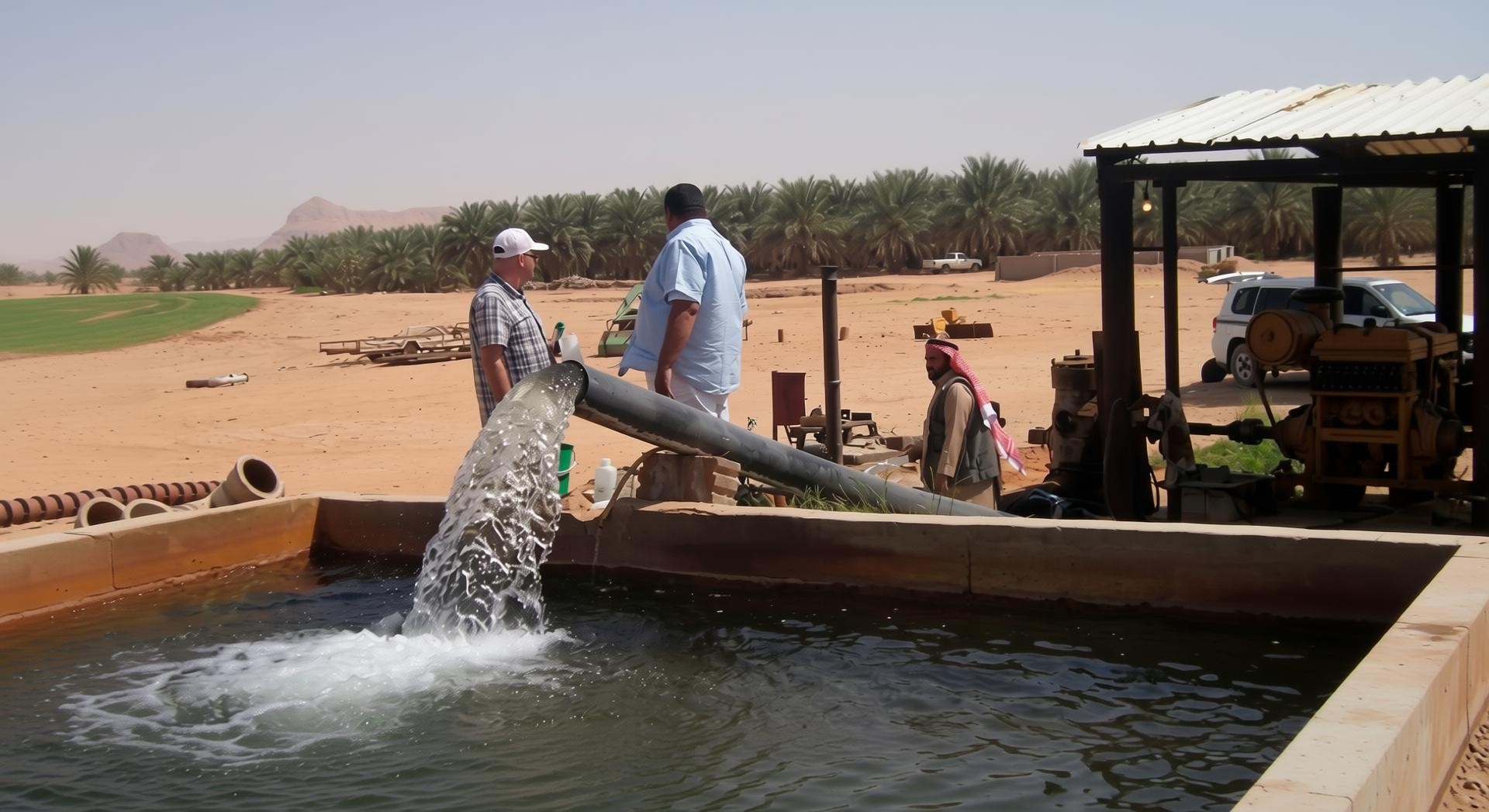
Is Arizona's water being shared with all Arizonans and conserved for the future, or is it being misused to the benefit of the Middle East?
The SouthWest Water Conservation Board ·
These are troubling times when thinking about the strain on our water resources, especially considering the years of struggle to ensure Arizona maintained a consistent water supply.
More than a decade before achieving statehood, people moving to the Territory of Arizona fought long and hard for a consistent, reliable source of water. This is not an opinion. It is a fact.
Leaders of our country understood the importance of water to ensure a future in the West. Arizona fought long and hard to gain water rights after the depletion of groundwater caused subsidence and large fissures in the southern part of the state. So why, after all those hard-won battles for water and more recently years and years of drought, would the Arizona State Land Department and the Arizona Department of Water Resources allow Saudi Arabia to take as much groundwater as they would like while leasing land for a minimal fee?
Following the Groundwater Act of 1980 and the formation of the Arizona Department of Water Resources, Arizona's leaders were charged with ensuring wells would be approved, groundwater would be monitored, and we would replenish what was used. Following construction of the Central Arizona Project, the 1996 Arizona Water Banking Authority was established. After that Act was passed, both the CAP and the Salt River Project began recharging groundwater — ensuring both short-term and long-term water supplies for Arizona.
People of Arizona cannot dig a new well or even a deeper well without approval. Owning land doesn't guarantee water availability.
So again, how did Saudi Arabia gain unfettered access to our hard-won water? Allowing that access undermines everything these protections were built for, and threatens to jeopardize Arizona's future.
Today, after more than 23 years of drought, we are in our second year of reduced water apportionments from the Colorado River. With continued low levels at Lake Powell and Lake Mead, we are in danger of future water cuts. Due to these restrictions, our Arizona farming and ranching community is 100% restricted from CAP water and several communities are without a reliable water source. Yet fields of alfalfa are grown to provide feed to cattle in Saudi Arabia — draining our groundwater — for next to nothing.
How is this okay? How did this get approved? If you consider the costs of building infrastructure such as Roosevelt Dam and the Central Arizona Project, plus the costs to replenish groundwater — not to mention what the government will be paying Arizona farmers not to plant crops — what is the actual cost of this grievous misuse of our precious waters?
Our early leaders understood the importance of water not only to make these desert lands habitable, but to our future. However, in 2015 all of these hard-won battles appear to have been forgotten by Arizona leadership when farmland was used to grow water-wasting crops for Saudi Arabia — a practice that is banned in their own lands. That poor decision will weigh heavy on us for years to come. It may also cause us to lose a great apportionment of water permanently. This is not acceptable.
A call to action
Those of us with the SouthWest Water Conservation board — a group of citizens interested in our great state's future — are initiating a call to action.
- Write to the Arizona Attorney General to ensure she is following through with efforts to end Saudi Arabian farming in Arizona.
- Learn more about Arizona's apportionment of the Colorado River and future reductions.
- Send your comments on the Colorado River to the Department of the Interior, Bureau of Reclamation. Do not miss the opportunity for your voice to be heard.
Highlights of Arizona's Water History
Late 1800s–early 1900s
Arizona is a territory with high use of groundwater for mining and agriculture, leading to depletion of groundwater and causing subsidence and fissures in the southern part of the state.
1902
President Theodore Roosevelt signs the Reclamation Act of June 17. Federally approved construction of large infrastructure would enable people to "reclaim arid lands for human use" and encourage Western settlement.
- ·Water users would repay construction costs later.
- ·The Act allows establishment of the Reclamation Service within the U.S. Geological Survey in July 1902.
- ·Reclamation built Roosevelt Dam in the Territory of Arizona, forming the largest in-state lake in Arizona.
1903
The Salt River Project is created to manage the waters from Roosevelt Lake and other dams planned along the Salt and Verde Rivers.
1907
The Reclamation Service becomes a stand-alone agency under the Department of the Interior — the Bureau of Reclamation.
1912
Arizona becomes the 48th state in the union on February 14, 1912.
1922
The Law of the River is established for the Colorado River — a seven-state compact through the Colorado River Compact of 1922, amended over the years.
- ·Upper Colorado River Basin — Wyoming, Utah, Colorado, and New Mexico.
- ·Lower Colorado River Basin — Arizona, Nevada, and California.
- ·The Colorado River provides water to 40 million people and irrigates nearly 5.5 million acres of agricultural land.
1925
Local farmers begin plans to build Lake Pleasant Dam. The effort was led by William Beardsley and designed by Carl Pleasant; D. Waddell aided in funding construction. No federal funds were used. The dam holds water from the Agua Fria River.
1927
Completion of Lake Pleasant Dam leads to formation of the Maricopa Water District, providing water from the lake to the valley and farming community. The dam is later renamed Waddell Dam.
1955
Despite construction of several dams in Arizona, there is still high dependence on groundwater, with estimates in excess of 70%.
1968
President Lyndon B. Johnson signs the Colorado River Basin Act authorizing construction of the Central Arizona Project. The CAP would enable Arizona to receive 1.5 million acre-feet of Colorado River water and reduce reliance on groundwater.
1971
The Central Arizona Water Conservation District is established. Commonly referred to as the CAP, it was put in place to aid in repaying construction costs and to manage and operate the water conveyance system as well as deliveries of water.
1973
The Bureau of Reclamation begins construction of the CAP.
1980
Former Governor Bruce Babbitt signs Arizona's Groundwater Management Act — the state's most celebrated water management tool.
- ·The Act addresses concerns of high reliance on groundwater.
- ·This Act forms the Arizona Department of Water Resources.
- ·New development in active management areas must demonstrate an assured water supply lasting at least 100 years.
- ·Established a safe yield — groundwater withdrawal cannot exceed annual replenishment of underground aquifers.
1985
The decision not to build Orme Dam leads to construction of New Waddell Dam under Plan 6. The new earthen dam stores Colorado River water for the CAP as well as Agua Fria River runoff, and provides flood protection.
1986
The Legislature enacts the Underground Water Storage and Recovery Program, allowing entities to store water underground and recover it at a later date.
1992
Historic Waddell Dam is breached and New Waddell Dam is in place.
1993–94
100-year flood waters test New Waddell Dam. The dam holds and Lake Pleasant reaches full capacity at elevation 1702. The 336-mile Central Arizona Project is declared substantially complete, bringing Colorado River water from Parker Dam (Lake Havasu) to the terminus southwest of Tucson.
- ·Agriculture communities are unable to repay for the CAP.
1994
The Legislature enacts the Underground Water Storage, Savings, and Replenishment Act, encouraging the use of renewable water supplies instead of groundwater.
1996
The Arizona Water Banking Authority is established, and the CAP begins recharging Colorado River water through the CAP Recharge Program. This allows renewable surface water supplies to be stored underground to replenish groundwater and store additional water "for recovery during periods of reduced water supply."
2018
Per news reports, Saudi Arabia began farming in Arizona after growing water-intensive alfalfa was banned in the arid kingdom.
2019
Colorado River Basin Drought Contingency Plans are signed. The Bureau of Reclamation brings seven states together for a historic agreement after 23+ years of drought and over-allocation, with Lake Powell and Lake Mead at very low levels.
2022
In January, the Lower Colorado Basin declares the first shortage of Colorado River water deliveries; Arizona reduces its apportionment by 320 thousand acre-feet per the 2019 Tier 1 agreement. On August 16, the Department of the Interior announces actions to protect the Colorado River System, setting 2023 operating conditions for Lake Powell and Lake Mead.
2023
On January 1, Tier 2a contingency measures are implemented to leave more water in Lake Mead and keep levels from reaching dead pool. Arizona's apportionment is reduced by 592,000 acre-feet (about 21%). On January 9, Arizona Attorney General Kris Mayes says she wants to end Saudi Arabian farming operations along the Colorado River within six months. In April the State of Arizona rescinds two Saudi Arabian well requests.
April 11, 2023
The Department of the Interior announces next steps to protect the stability and sustainability of the Colorado River Basin. Three alternatives were identified:
- ·No action.
- ·Alternative 1 — reduced releases from Glen Canyon Dam based on priority of water rights.
- ·Alternative 2 — the same percentage reductions across all Lower Basin water users.
May 22, 2023
Interior temporarily withdraws the draft Supplemental Environmental Impact Statement published the previous month to fully analyze the proposal's effects under the National Environmental Policy Act. Reclamation will publish an updated draft SEIS for public comment with the consensus-based proposal as an action alternative; the original May 30, 2023 comment deadline is no longer in effect. The Department plans to finalize the SEIS process later this year.
Notes
- Per CAP, one acre-foot equates to a yearly supply of water for three Arizona families.
- The Colorado River provides water to more than 40 million people in two countries, seven states, and 29 Indian tribes. (University of Montana — Center for Natural Resources & Environmental Policy)
- The Colorado River supports $1.4 trillion in annual economic activity and 16 million jobs across Arizona, California, Nevada, Utah, Colorado, New Mexico, and Wyoming. (nature.org)
- Steps toward water conservation are needed to ensure we do not move to Tier 3, which would occur if the Lake Mead shortage falls even further. Tier 3 could significantly affect Arizona's apportionment. (azcentral.com)
Sources
This commentary was spurred by numerous news stories uncovering the land leases and water depletion by the Middle East. Information on Arizona's water history was obtained from the following sources:
- Law of the River — seven-state compact (CAP)
- Bureau of Reclamation — Colorado River Basin
- CAP — adapting to shortage
- Salt River Project — water resources
- Arizona Department of Water Resources
- ADWR — Lower Basin Drought Contingency Plan
- Interior / Reclamation — actions to protect Lake Powell & Lake Mead
- Reclamation — Desalination & Water Purification Research Program
- Interior — Biden-Harris administration consensus system conservation proposal
- Reclamation — Colorado River SEIS
- Arizona Water Facts
- AMWUA — Arizona aquifers: protecting the water beneath our feet
- Know Your Water News (Central Arizona Project)
- Joanna Allhands, "This Arizona water law was a long shot, but it ended up saving us" (azcentral)
- ADWR agency history (Arizona State Library)
- Water — Use It Wisely